

-
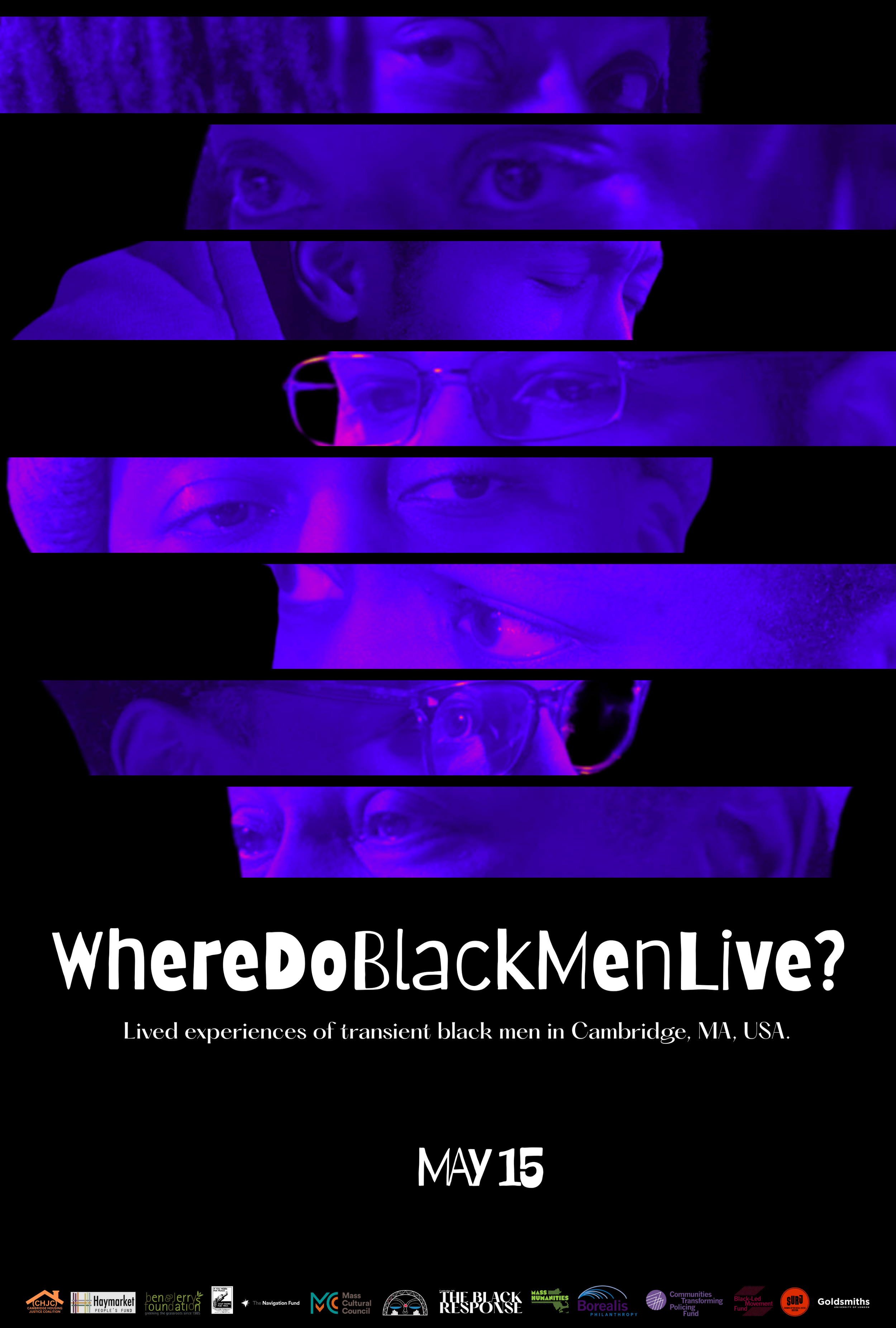
Where Do Black Men Live is a powerful fictional dramatization inspired by the 1994 documentary by director Lee Mun Wah, The Color of Fear. Written by Gift Tapiwa, Joy Wrolson, and Stephanie Guirand, the film uses a verbatim theatre style—meaning the script is composed directly from the real words of Black men interviewed about their housing experiences. The film imagines eight of these men in conversation, seated in a circle, sharing their stories with one another. What unfolds is a deeply moving exploration of the challenges and triumphs they’ve faced in finding and keeping home.
-
Yes. Where Do Black Men Live was ethically approved by the Sociology Department at Goldsmiths, University of London. The project was supervised by Dr. Brian Alleyne and Dr. Jennifer Yanco (Boston University), ensuring that all research and creative practices met rigorous ethical standards.
-
No. The narrative accounts were carefully anonymized through several measures, including the removal or alteration of names, locations, and identifying details. Stephanie Guirand, the researcher and interviewer, was not involved in the casting process. This allowed the creative team full freedom to cast actors based on artistic interpretation, leading to changes in age, appearance, and other characteristics.
There is one exception—one individual gave explicit consent to share specific elements of their story.
There is one exception—one individual gave explicit consent to share specific elements of their story.xt goes here
-
No, this is not a documentary. While the film is based on real interviews and the script uses the exact words of Black men who shared their housing experiences, the individuals depicted on screen are actors. The film is a fictional dramatization crafted in a verbatim theatre style.
-
The film was co-directed by Corinne Spencer, Joy Wrolson, and Gift Tapiwa. Corinne served as the crew lead and collaborated closely with cinematographer Sean Hanley and the rest of the amazing crew. Joy Wrolson was the lead dramaturg—she led the casting process and worked directly with the phenomenal actors to prepare them for filming. Gift Tapiwa, the lead scriptwriter, acted as a bridge between the script, the visuals, and the performances, working closely with both Corinne and Joy to bring the story to life.
-
The film project was funded either in cash or in kind by the following funders:
Ben & Jerry’s Foundation
Borealis Philanthropies - Black Led Movement Fund
Borealis Philanthropies - Communities Transforming Policing Fund
Haymarket People’s Fund
Massachusetts Cultural Council
Massachusetts Humanities Council
New England War Tax Resistance Fund
The Navigation Fund
Hunter College
-
We urge you to take action through two key initiatives:
Support the Griffin Petition
Advocate for the creation of a municipal housing voucher program by supporting the Griffin Petition. This petition calls for an amendment to the Affordable Housing Trust (AHT) that would allow it to directly fund city housing subsidies. The addition of municipal vouchers—including inclusionary vouchers—would provide a critical and powerful tool for addressing housing inequity in Cambridge.Support the Cambridge Community Land Trust (Cambridge CLT)
Endorse, get involved, and contribute to the Cambridge Community Land Trust. Originally formed as part of a participatory action research project to create an alternative public safety program in Cambridge, the Cambridge CLT played a foundational role in the development of the Cambridge Housing Justice Coalition (CHJC). What began as a CHJC working group has since grown into a stand-alone organization. The Cambridge CLT is a resident-led initiative dedicated to securing long-term, community-controlled affordable housing. Operating independently of government structures, the Cambridge CLT is rooted in anti-racist principles. It is committed to addressing the housing needs of those most vulnerable to displacement and housing insecurity—particularly Black men and other marginalized members of our community.
-
There are currently four scheduled screenings of Where Do Black Men Live taking place between May and June 2025. Three events will be held in person, and one will be hosted online via Zoom. Here are the details: For times go to Registration Link: tinyurl.com/WDBMLScreenings
May 15 - Film Premier - The Foundry (Cambridge, MA)
Join us for the premiere of Where Do Black Men Live at The Foundry. Confirmed speakers: Professors Sandra Susan Smith, Chenjerai Kumanyika, Spencer Piston, and actor Emmanuel Okeke.May 29 - Film Housing Justice - TBD (Cambridge, MA)
TBR is working with the rest of the Cambridge Housing Justice Coalition (CHJC) on this event. This will be hosted by Banti Gheneti. Speakers include Margaret Brady and Rebecca Mailman of the Cambridge CLT.June 19 - Juneteenth- Screening at Brattle Theatre & Cambridge Commons (Cambridge, MA)
This two-part Juneteenth event begins with a screening at Brattle Theatre. Keynote speakers: Corinne Spencer (Film Producer) and Ukumbwa Sauti (Masculinities and Media Studies Scholar). Following the screening, join us for a Juneteenth festival outdoors at Cambridge Commons.Jun 26 - Film Crew Panel (Zoom)
This online event includes a screening of the film followed by a panel discussion with the creative team: Corinne Spencer, Joy Wrolson, and Gift Tapiwa.
-
In May, we premiered our Where Do Black Men Live? It is a nonfiction film that tells the housing stories of Black men in Cambridge, MA. Based on interviews with Black men, the film explores issues including incarceration, housing transience, and the lived experience of being un- and under-housed for prolonged periods while navigating social life and the criminal legal system. The interviews are recreated by actors, with all lines coming from the men interviewed. Serving some functions of a truth commission, the film gives expression to the lived experiences of a severely marginalized group, enabling Black men to speak their truth and shedding light on harms that typically remain hidden from public view.
The film screenings in May and June were a big success. There were over 800 registrants and at least 600 attendees.
Here are some upcoming screenings:
Goldsmiths, University of London Screening: The Graduate School has invited Stephanie, TBR member, to screen the film at the Graduate School induction week. This screening is scheduled for Tuesday September 23 in London.
Hunter College Screening: Since the film was shot at Hunter College in New York, they are hosting a screening on October 10.
Unitarian Universalist First Parish Screening: TBR is working with the UU First Parish of Cambridge to host a screening of the film specifically geared toward low income (Black) men. We are working with partners at UU First Parish to host the event in their space. This event will also include free haircuts by Wismic Etienne, dinner by Stephanie’s mother, and mutual aid supplies (coats, hats, etc.) from The Spot.
Wellesley College Screening: The folks at the Anti-Carceral Co+Laboratory at Wellesley College are organizing a screening of the film for October 20, 2025.
The Sociological Review : The Sociological Review magazine has invited Stephanie to do a Sociological Review Residency this fall. As part of this incredible opportunity, TBR will be hosting a screening of the film at Genesis Cinema in London for Black History Month UK, October 30, 2025.
-
If you or your organization would like to host a screening of Where Do Black Men Live, please contact Virginia at general@theblackresponsecambridge.com. We do not charge any fees to screen the film.